Commercial Walk-In Cooler Repair in Port St. Lucie, FL
Walk-in cooler repair in Port St. Lucie for restaurants, grocery stores and commercial facilities that can't afford warm product. 2R Cooling is based in Port St. Lucie and repairs walk-in coolers across the Treasure Coast. Call (772) 230-2665 or request service.
- 170+ Google reviews
- 24/7 emergency refrigeration
- Licensed & insured in Florida
Looking for walk-in cooler repair near Port St. Lucie? Call or request service to discuss the equipment, symptoms and current availability.
Documented Port St. Lucie work: Alfonso's Pizza condensing unit replacement · Francesca's Pizza compressor replacement
Planning a new box or replacement system? Explore walk-in cooler and freezer installation.
Condensing unit replacement example: Nettles Island cooler condensing unit replacement.
Documented Walk-In Cooler Work in Port St. Lucie
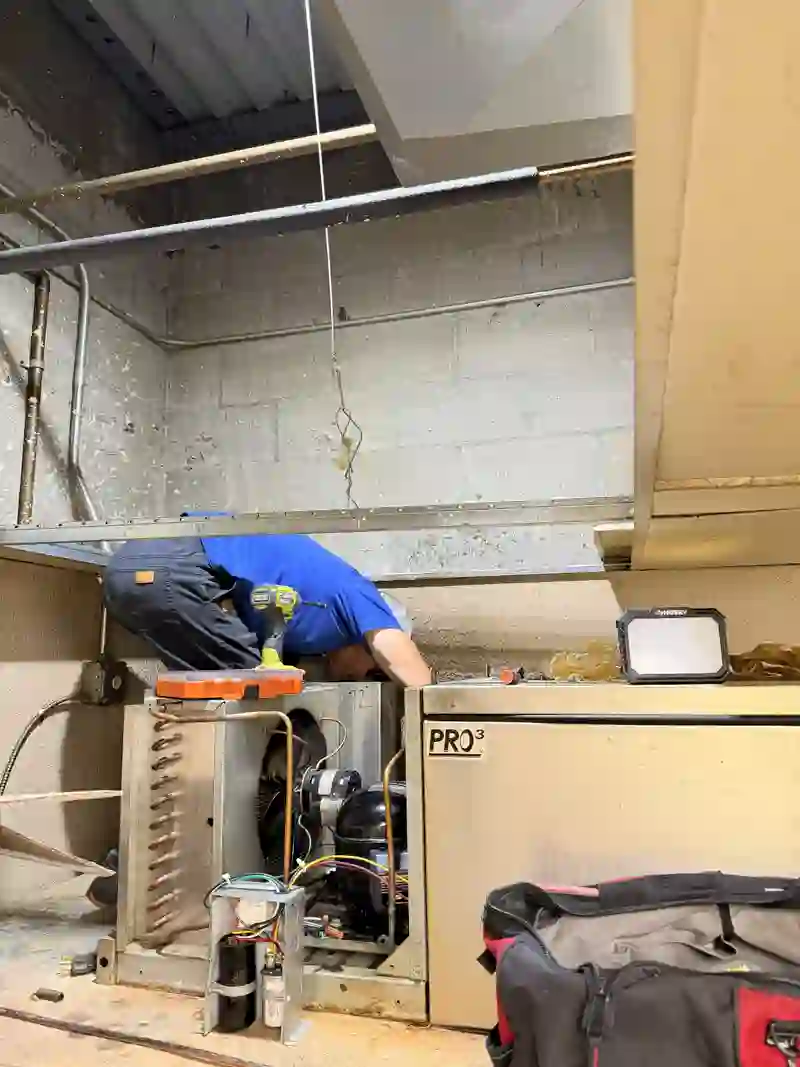
Walk-In Cooler Condensing Unit Replacement at Alfonso's Pizza in Port St. Lucie
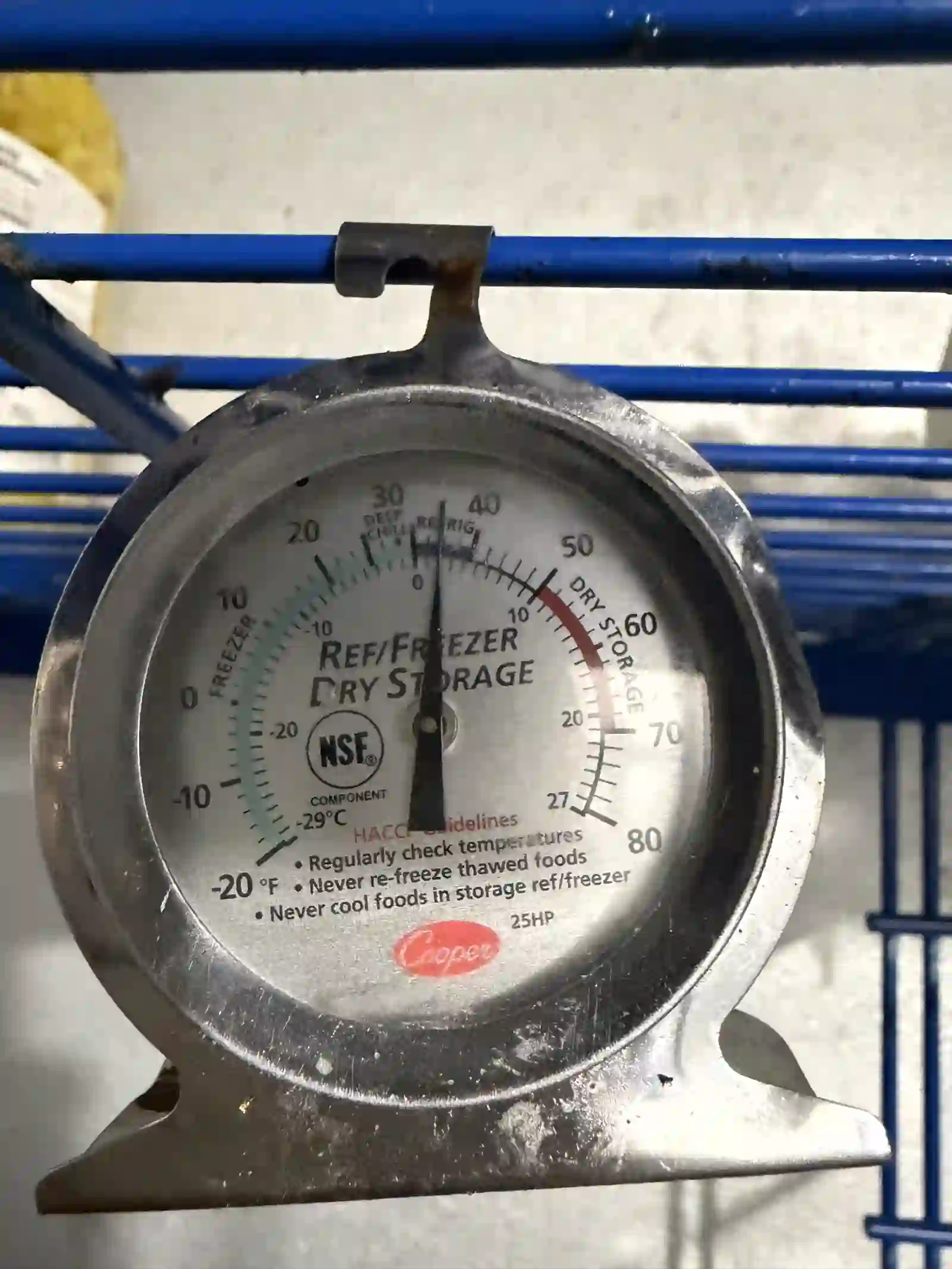
Documented problem: Alfonso's Pizza in Port St. Lucie reported that their medium-temperature walk-in cooler was running warm. The box was holding around 44°F — above safe food-storage temperature for a working restaurant kitchen.
Diagnosis: The walk-in cooler was holding approximately 44°F instead of proper medium-temperature range. Inspection traced the cooling failure to the condensing unit serving the walk-in cooler. The existing condensing unit could not be returned to reliable service and required replacement.
Work completed: Performed on-site refrigeration diagnostics on the walk-in cooler system. Recovered the refrigerant from the failed condensing unit. Removed the failed condensing unit and set a new Tecumseh 4,100 BTU medium-temperature condensing unit. Reconnected the system and charged it with R-404A refrigerant. Started the system and verified operation and refrigerant condition. Measured final compressor amperage at approximately 5.5 amps. Monitored box temperature pull-down to confirm the repair.
Verified result: With the new Tecumseh condensing unit in place, the walk-in cooler pulled down from approximately 44°F to 37°F. Final compressor amperage measured approximately 5.5 amps, and system operation and refrigerant condition were verified before the job was closed out.
Read the complete Alfonso's Pizza project →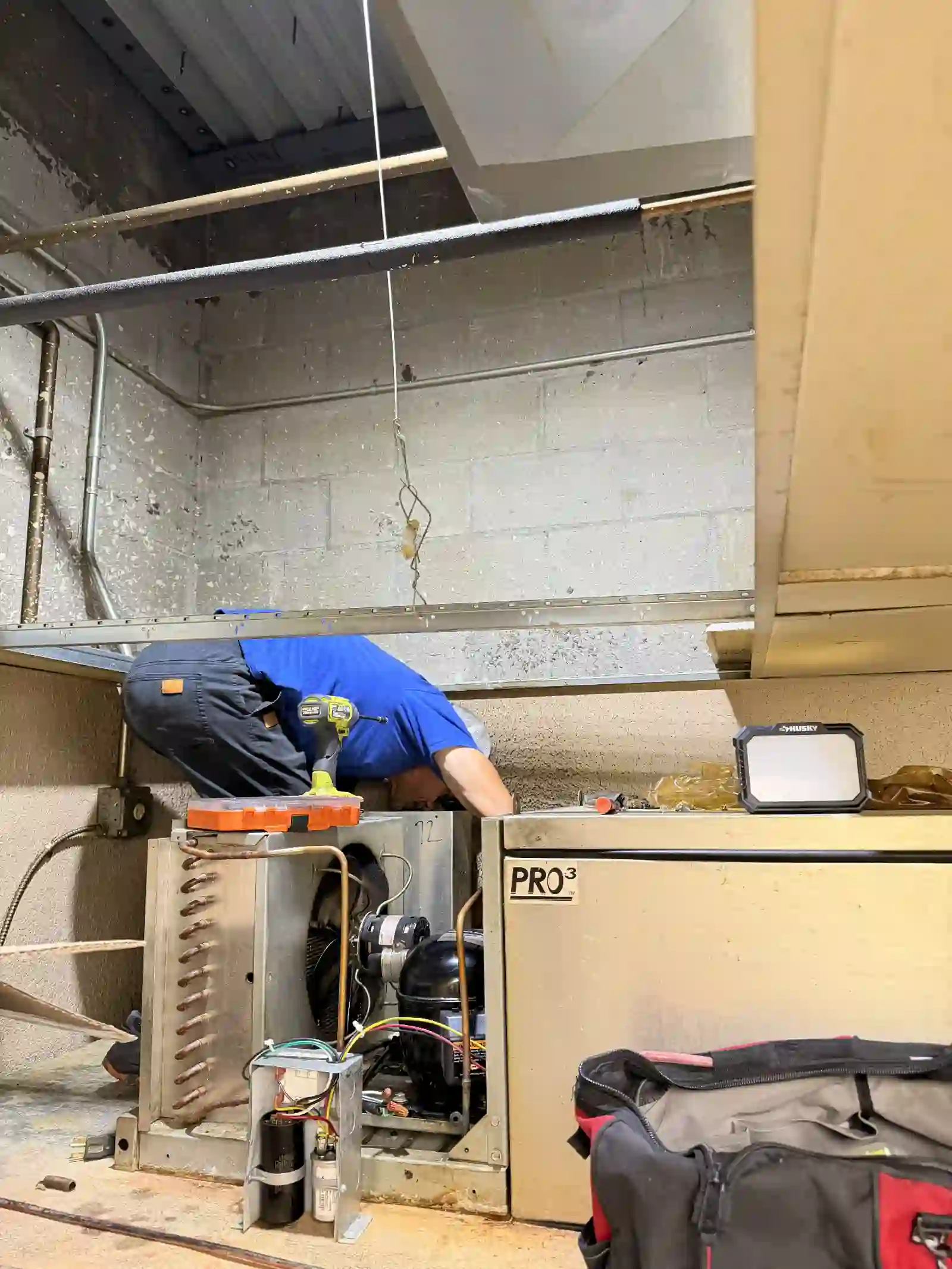
What we repair on a walk-in cooler
A walk-in cooler is a refrigeration circuit, an airflow system, an electrical control circuit and a sealed box — and any one of them can put your product above 41°F. We diagnose all four instead of swapping the obvious part, then document what failed and why. Below is how we approach the failures we are called for most on commercial coolers.
Walk-in cooler not holding temperature
A box drifting above 41°F is the call we run most. Before parts get replaced, we verify the actual box and product temperature, check suction and head pressure, superheat and subcooling, and confirm airflow across the evaporator. Warm boxes come from very different causes — low charge, a dirty or iced coil, a failing condenser fan, an overloaded box after a delivery, or a door left ajar — and each one is fixed differently.
Compressor and condensing unit failures
We test windings, start components, contactors and capacitors before condemning a compressor, because a burnt contactor or failed start relay looks identical to a dead compressor from the outside. When a compressor truly has failed, we determine why it failed — flooding, short cycling, restricted metering, or a lost condenser fan — so the replacement doesn't fail the same way.
Condenser fan and coil problems
Condensers on Florida rooftops and back pads foul quickly with grease, salt air and landscaping debris. A blocked coil or a seized condenser fan motor raises head pressure, cuts capacity and eventually trips the compressor on overload. We clean the coil, verify fan motor amp draw and rotation, and replace failed motors and blades.
Evaporator fan motor failures
A failed evaporator fan motor stops air from moving across the coil, so the box cools poorly or ices up while the compressor keeps running. Before replacing anything, we verify the electrical supply to the motor, test the motor's condition, and check blade clearance and actual airflow across the coil — so the repair addresses the part that actually failed.
Evaporator icing and airflow loss
Ice on the evaporator means the coil is running below freezing or the defrost isn't clearing it. Common causes are low refrigerant charge, a failed evaporator fan motor, a plugged drain line that refreezes, restricted airflow from stacked product, or humid outside air pouring through a bad door seal.
Refrigerant leaks
We locate and repair leaks rather than repeatedly topping off a system. Electronic leak detection, pressure testing and nitrogen purging are part of a proper leak repair, followed by evacuation and a weighed-in charge. Refrigerant selection and service procedures depend on the equipment and manufacturer requirements.
TXV, metering and restriction problems
A hunting or starved thermostatic expansion valve produces a cooler that almost works: high superheat, poor capacity, and long run times. We check bulb mounting and charge, filter drier pressure drop, and line restrictions before replacing the valve, and we set superheat to the manufacturer's spec afterwards.
Defrost failures
Cooler boxes running near freezing still depend on the off-cycle or timed defrost working correctly. We test defrost timers and electronic controllers, termination sensors, heaters where fitted, and drain line heat, and we correct defrost schedules that were set wrong at installation.
Drain line and condensate problems
A plugged or frozen drain pan floods the floor, refreezes onto the coil, and eventually trips the box on a safety. We clear the drain, verify the trap and heat-trace, and check that condensate actually leaves the unit instead of refreezing — recurring ice build-up under the coil is often a drain problem, not a refrigerant problem.
Electrical and contactor problems
Blown fuses, pitted contactors, failed relays, loose lugs, bad temperature controllers and miswired alarm contacts all show up as a cooler that stops cooling for no obvious reason. We trace the control circuit, correct the fault, and check the connections that caused it.
Temperature control problems
A drifting setpoint, a failed electronic controller, or a sensor reading wrong puts the box out of food-safe range even when the refrigeration circuit is fine. We verify the actual product temperature against the controller reading, recalibrate or replace misreading sensors and controllers, and confirm the alarm contacts work so a slow drift doesn't become a silent failure.
Doors, gaskets, hinges and closers
Door problems are the cheapest fix and the most commonly ignored. Torn gaskets, sagging hinges, failed closers, broken sweeps and dead door heaters let humid air in all day, which ices coils, runs up run time, and shortens compressor life. We replace gaskets and hardware and re-align doors so the box seals again.
Emergency walk-in cooler service
A person answers our line 24/7. If a cooler is down with product in it, tell us the box temperature and what changed, and we will talk through immediate steps to protect inventory while a technician is dispatched.
Businesses and equipment we serve
Our commercial refrigeration work is concentrated in food service and retail, where a cooler outage is an inventory problem within hours.
Restaurants and commercial kitchens
Line coolers, back-of-house walk-ins, prep tables and reach-ins that have to hold food-safe temperature through service and pass inspection.
Bakeries
Dough retarders, proofing-adjacent coolers and ingredient storage where humidity and consistent temperature matter as much as the setpoint.
Breweries and taprooms
Cold rooms, keg coolers and glycol-adjacent walk-ins where a temperature swing affects product quality, not just shelf life.
Grocery and foodservice
Produce and dairy walk-ins, back-room storage boxes and display case circuits that run continuously and rarely get a scheduled shutdown.
Convenience stores
Beverage cave walk-ins and merchandiser doors that see constant door openings and heavy condenser fouling.
Medical, floral and institutional
Coolers where the temperature log matters — clinics, florists, schools and care facilities that need documented repairs.
Recent commercial refrigeration work
Documented service calls from our own records. Some cover a diagnosis or a planned follow-up rather than a finished repair; each case page states what was done and what remains.
Walk-In Cooler Compressor Replacement at Francesca’s Pizza in Port St. Lucie
2R Cooling replaced the locked compressor in the existing R22 walk-in cooler system at Francesca’s Pizza in the Gatlin area of Port St. Lucie, selecting a Tecumseh AKA9455EXD using Tecumseh’s replacement guidance.
Tequesta, FLWalk-In Cooler Installation with ShieldVault in Tequesta, FL
2R Cooling replaced a commercial walk-in cooler in Tequesta, from removal of the old enclosure to panel modification and sealing, one condensing unit, two evaporators, copper refrigerant piping and installation of ShieldVault at the cooler's refrigeration control panel. Explore the job through eleven real project photos.
Jensen Beach, FLWalk-In Freezer Repair in Jensen Beach, FL
Walk-in freezer repair at a Jensen Beach, FL food-service location. 2R Cooling replaced two failed fuses and identified a deteriorating condenser fan motor.
Stuart, FLWalk-In Cooler Electrical Diagnosis in Stuart, FL
Commercial walk-in cooler diagnosis in Stuart, Florida. 2R Cooling identified visibly heat-damaged electrical wiring and a contactor issue after the compressor failed to operate.
“Raul was great, fast and professional from first contact to final payment. … I observed him doing all the things right without taking shortcuts.”
Need ongoing refrigeration maintenance?
Ask 2R Cooling about a maintenance agreement for your walk-in coolers, freezers and other commercial refrigeration equipment. We’ll review your equipment and prepare a written scope for your business.
Related refrigeration services
Commercial Refrigeration
Walk-ins, reach-ins, display cases, ice machines and rack systems.
Walk-In Freezer Repair
Defrost failures, frost build-up and boxes that won't hold below zero.
Emergency Refrigeration Repair
24/7 dispatch when a box is down and product is at risk.
Reach-In Refrigeration Repair
Reach-ins, prep tables and merchandisers above food-safe temperature.
Walk-in cooler repair near you
2R Cooling & Refrigeration is based in Port St. Lucie and dispatches across the Treasure Coast and the northern Palm Beaches. Port St. Lucie businesses can also see our commercial refrigeration in Port St. Lucie page.
Restaurants, markets and commercial facilities can review local service information for Stuart, Fort Pierce, Jupiter and Tequesta. Call or request service to discuss the cooler model, current temperature, symptoms and availability.
Walk-in cooler repair questions
How fast can you get to a walk-in cooler that is down?+
Our line is answered 24/7 by a person, and emergency refrigeration calls are prioritized over routine work. Actual arrival time depends on where the site is across the Treasure Coast and Palm Beaches and what is already dispatched, so we give you a realistic window on the call rather than a blanket promise.
My walk-in cooler is running but not getting cold. What is usually wrong?+
The most common causes are a dirty or iced evaporator or condenser coil, a failed condenser or evaporator fan motor, low refrigerant from a leak, a failing compressor or start component, or a door that no longer seals. Diagnosis takes pressure and temperature readings — replacing parts by guess is how coolers fail twice.
Should I repair or replace an older walk-in cooler?+
We look at the condensing unit's age and condition, refrigerant type, compressor history, panel and door condition, and what the repair costs against a replacement condensing unit or box. If a repair keeps a serviceable box running for years, we say so; if you are paying for the same failure repeatedly, we quote the replacement instead.
See how we plan a walk-in cooler installation or replacement →Do you repair walk-in freezers as well as coolers?+
Yes. Freezers fail differently — usually in the defrost circuit — and we cover them on our walk-in freezer repair page. Coolers and freezers at the same address are one call and one invoice.
Do you just add refrigerant, or do you fix the leak?+
We find and repair the leak. Topping off a leaking system is a temporary fix that costs more over a season, risks your product again, and is not the right way to handle refrigerant.
Can you service the brand of cooler I have?+
We work daily with Heatcraft, Bohn, Copeland, Master-Bilt, Hussmann, Hill Phoenix, True, Beverage-Air, Continental and similar commercial refrigeration equipment, and we service walk-in boxes regardless of who built the panels.
Do you offer maintenance agreements for commercial refrigeration?+
Yes. Scheduled coil cleaning, gasket and door checks, electrical inspection and charge verification catch the failures that otherwise become after-hours emergencies, and service notes are kept for each unit.
Will I get documentation for my health inspection or insurer?+
We keep service notes for each unit covering the findings, the work performed and any parts used. Ask for a copy when you need a record for an inspection, warranty claim or insurer.
When you request service
You don't need to diagnose anything yourself, but these details help us bring the right parts and prioritize your call. Urgent failures should be phoned in at (772) 230-2665.
- ✓Business address and an on-site contact
- ✓Equipment type and brand/model if known (a photo of the data plate helps, if you can reach it safely)
- ✓Current temperature (box display plus a separate thermometer if you have one) and when the problem began
- ✓Access details and whether multiple units are affected
- ✓What you can see and hear: fans running or not, ice on the coil, unusual noise or short cycling
Leave electrical and refrigerant work to a technician — share what you observe and we'll take it from there.
Walk-in cooler not holding temperature?
Call 2R Cooling for commercial refrigeration repair, or request service online.